





Complete Guide for Crypto Users and Investors
- What is Yield Farming? A Simple Explanation
- Why You Must Report Yield Farming to the Tax Office
- Types of Transactions in Yield Farming You Must Report (and How)
- 1. Earning Rewards from Yield Farming
- 2. Selling Rewards for Profit (Capital Gains)
- 3. Swapping Tokens Within DeFi
- 4. Reinvesting or Compounding Rewards
- How to Calculate Your Taxable Amounts
- Important Records to Save for Yield Farming Taxes
- Crypto Tax Software Tools That Help
- Do All Countries Treat Yield Farming the Same in Taxes?
- Special Case: Impermanent Loss
- Yield Farming Across Multiple Chains
- Penalty for Not Reporting Yield Farming Taxes
- How to File Your Yield Farming Taxes
- Step 1: Gather Records
- Step 2: Choose a Tax Software
- Step 3: Fill Out Forms
- Step 4: Submit to Tax Office
- Step 5: Keep Records for Years
- Do I Pay Taxes If I Don’t Sell Rewards?
- Can I Use Losses to Offset Taxes?
- Common Mistakes to Avoid When Reporting Crypto Taxes
- Checklist: What You Need to Report for Yield Farming Taxes
- Web & Community Resources
- Frequently Asked Questions (FAQs)
- 1. What exactly should I report for yield farming?
- 2. Are transaction fees deductible?
- 3. Do I pay tax if I reinvest rewards?
- 4. What happens if I ignore my crypto taxes?
- 5. Can software handle my yield farming taxes?
- Final Thoughts: Why Accurate Reporting Matters
Yield Farming Taxes: What You Need to Report is a topic every crypto investor needs to take seriously in 2026. As decentralized finance (DeFi) grows fast, more people are earning rewards by participating in decentralized platforms. However, that also means they must understand how tax authorities treat these earnings. This article will walk you through everything you need to know about Yield Farming Taxes: What You Need to Report in clear, simple language.
Whether you are new to crypto or have been farming for months, this guide will help you stay compliant with taxes and avoid trouble later. Let’s dive in and make tax season easier to handle!
What is Yield Farming? A Simple Explanation
Before we look at Yield Farming Taxes: What You Need to Report, we first must understand yield farming itself.
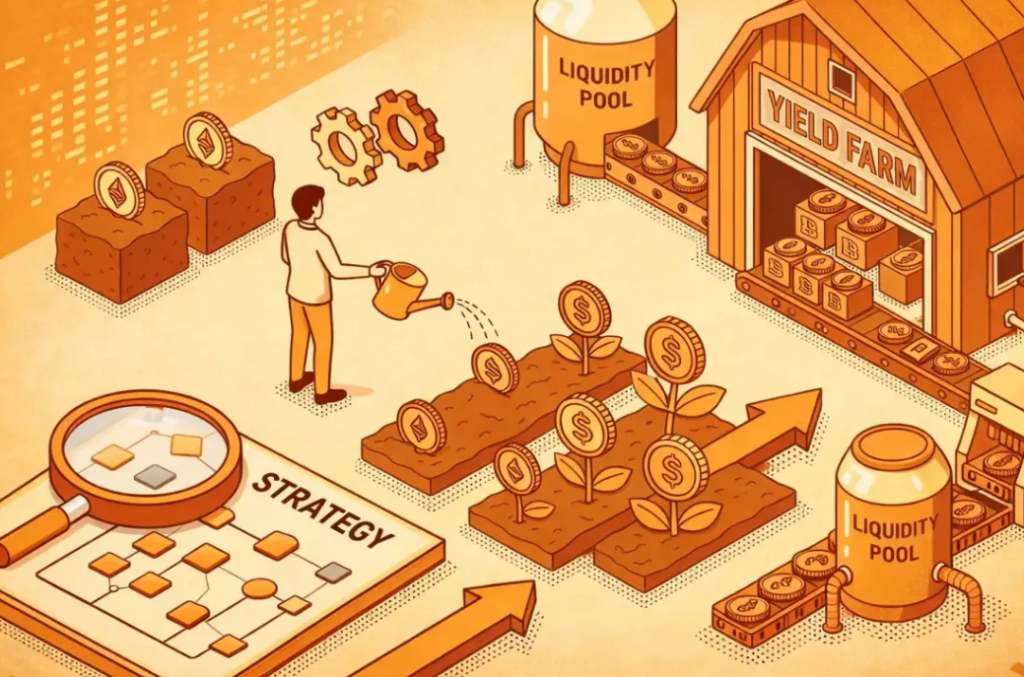
Yield farming is a way to earn rewards from your cryptocurrency. You “lend” or “stake” tokens in a DeFi platform. The platform then uses your tokens for lending or liquidity, and you earn income in return. This income is typically in the form of crypto tokens, like ETH, stablecoins, or platform tokens.
Think of yield farming like earning interest in a savings account, but instead of dollars, you earn cryptocurrency.
Why You Must Report Yield Farming to the Tax Office
Many people think crypto earnings aren’t taxable. That is incorrect.
Most countries treat income from yield farming as taxable events. This means you must report your crypto earnings just like you report wages, interest, or rent income. The tax office expects you to explain how much you earned, how much you sold, and sometimes how much you paid in fees.
If you fail to report, you might face penalties or audits later.
Types of Transactions in Yield Farming You Must Report (and How)
In yield farming, you may perform many types of transactions. Each one might be taxable.
Here is a quick list of the types:
| Transaction Type | Taxable? | What You Must Report |
|---|---|---|
| Staking tokens | No | Just keep records |
| Earning rewards | Yes | Report as income |
| Selling rewards for profit | Yes | Report capital gains |
| Swapping tokens within DeFi | Yes | Report gains/losses |
| Reinvesting rewards | Maybe | Track cost basis |
This table helps show why clear records matter. Let’s break these down:
1. Earning Rewards from Yield Farming
When you earn extra tokens as rewards, that is income. Even if you don’t convert the tokens to cash, the tax office sees that as income you received.
Example:
You stake 100 DAI and earn 5 DAI as a reward. That 5 DAI is income for that tax year.
You must report it on your tax form as “Other Income” or similar, depending on your country.
2. Selling Rewards for Profit (Capital Gains)
After receiving rewards, you might sell them for another crypto or fiat currency. If the value changed between earning and selling, that difference is a capital gain or loss.
Example:
- You earned 5 UNI worth $15.
- Later you sold it for $20.
- You have a capital gain of $5.
This must be reported separately from income.
3. Swapping Tokens Within DeFi
Sometimes yield farmers swap one token for another (for example, ETH for USDC). This swap can trigger a taxable event because your tokens may be worth more or less than before.
This is similar to selling and buying because tax offices want to see how gains or losses happened.
4. Reinvesting or Compounding Rewards
When you earn tokens and then reinvest them, the original income is still taxable. Later when you sell, you must calculate the cost basis — meaning how much those tokens were worth when you first recorded them.
How to Calculate Your Taxable Amounts
Understanding how to calculate income and capital gains in yield farming is important. Here are the key steps:
- Record the Date and Value – Write down the date you received rewards and how much they were worth in USD or your local currency.
- Track When You Sold or Swapped – Note the sale, swap, or disposal date.
- Calculate Gain or Loss – Subtract the value when earned from the value when sold.
Formula Example for Capital Gain
Capital Gain = Value When Sold – Value When Earned
💡 If the number is negative, that is a capital loss.
Tax software can help you track this, but always keep your own records too.
Important Records to Save for Yield Farming Taxes
Good record keeping makes reporting easier. You should save:
- Wallet addresses
- Transaction dates
- Value in local currency at the time of transaction
- Amount of tokens earned
- Fees paid
- Exchange rate at time of earning
These details may be needed if the tax office asks questions later.
Crypto Tax Software Tools That Help
There are many tools that help calculate your yield farming taxes. Some of the most popular are:
| Tool Name | Free Version | Best For |
|---|---|---|
| Koinly | Yes | Easy tracking |
| CoinTracker | Yes | Good reporting |
| TokenTax | No | Professional help |
| CryptoTaxCalculator | Yes | DeFi tracking |
These tools can connect with your wallet and generate a tax report you can share with your accountant.
Do All Countries Treat Yield Farming the Same in Taxes?
No. Different countries have different rules. Some treat crypto like property, others like currency. For example:
- In the United States, the IRS treats crypto as property and tax applies on both income and gains. (source: irs.gov)
- In UK, HMRC treats crypto assets as taxable income and capital gains.
- In Canada, crypto farming earnings are taxed as income.
If you are unsure how your country treats crypto, check your local tax office rules.
Here is an external link for a common resource:
👉 External reference on crypto tax rules: https://www.irs.gov/businesses/small-businesses-self-employed/virtual-currencies‑tax‑faqs
Special Case: Impermanent Loss
Impermanent loss is a DeFi risk. It happens when the price of your token changes compared to when you first deposited.
It’s not always taxable until you sell. Keep good records so you can adjust your cost basis later.
Yield Farming Across Multiple Chains
If you farm on different blockchains like Ethereum, Binance Smart Chain, or Polygon, you must record each chain separately. Each chain may have unique fees and values.
Always convert values into your local currency at the time of each event.
Penalty for Not Reporting Yield Farming Taxes
Tax offices may charge fines, interest, or penalties if you don’t report crypto earnings. In extreme cases, they may audit your financial records.
Avoid stress by being transparent and reporting honestly.
How to File Your Yield Farming Taxes
Here are steps to file your yield farming taxes:
Step 1: Gather Records
Collect all transactions, rewards, and swaps.
Step 2: Choose a Tax Software
Use a reliable tool to calculate totals.
Step 3: Fill Out Forms
Report income and capital gains accurately.
Step 4: Submit to Tax Office
Send with supporting documentation.
Step 5: Keep Records for Years
Many tax offices want you to keep records for 3–7 years.
Do I Pay Taxes If I Don’t Sell Rewards?
Yes. Even if you don’t sell, the moment you receive rewards, they are usually taxable as income.
It doesn’t matter if you hold them — they still count as income.
Can I Use Losses to Offset Taxes?
Yes. If you have a capital loss when selling tokens, you can often use it to offset gains. This may reduce what you owe.
Always check local rules for loss deduction limits.
Common Mistakes to Avoid When Reporting Crypto Taxes
Here are mistakes people often make:
✔ Not reporting rewards as income
✔ Ignoring swaps as taxable events
✔ Forgetting fees in your calculations
✔ Not using proper record keeping
✔ Relying on wallet history alone (some wallets omit data)
Avoid these mistakes to stay compliant.
Checklist: What You Need to Report for Yield Farming Taxes
Use this checklist before filing:
✅ All reward amounts in local currency
✅ All dates and values of tokens received
✅ All swaps and sales reported
✅ Cost basis for each token
✅ Fees documented
✅ Losses recorded
Web & Community Resources
For more help on crypto taxes and rules, you can check:
- Internal link to more crypto news and guides 👉 https://www.cryptonews21.com
- Your local tax office website
- Crypto tax software help pages
Frequently Asked Questions (FAQs)
1. What exactly should I report for yield farming?
You must report all rewards as income. Then report any gains or losses when you sell or swap tokens.
2. Are transaction fees deductible?
Yes. Most countries allow you to include fees in your cost basis when calculating gains or losses.
3. Do I pay tax if I reinvest rewards?
You pay tax on income when rewards are received. Reinvesting doesn’t change the income tax event.
4. What happens if I ignore my crypto taxes?
Tax authorities may charge penalties, interest, or even pursue legal action if you fail to report.
5. Can software handle my yield farming taxes?
Yes. Tax tools like Koinly or CoinTracker can help, but always check results carefully.
Final Thoughts: Why Accurate Reporting Matters
Understanding Yield Farming Taxes: What You Need to Report is more than a checklist—it’s a way to protect your finances.
Crypto is exciting, but ignoring taxes is risky. Think of taxes like a passport to keep your crypto journey safe and legal.
Take simple steps today. Keep records. Use tools. Ask for help if needed. The more you understand, the easier tax season becomes next time.