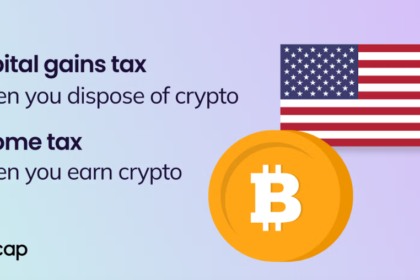






With the rise of decentralized finance (DeFi), more people are participating in activities like lending, staking, liquidity provision, and yield farming. However, every DeFi transaction has tax consequences, making calculating cost basis for DeFi transactions a critical skill for participants. Understanding your cost basis ensures you report accurate gains or losses to tax authorities and avoid penalties. This guide will explain how to calculate your cost basis in simple terms and provide practical examples for common DeFi scenarios.
- What Is Cost Basis and Why It Matters
- Basic Formula for Cost Basis
- Calculating Cost Basis in DeFi Transactions
- 1. Token Swaps
- 2. Liquidity Pool Tokens
- 3. Staking and Yield Farming Rewards
- 4. Handling Token Splits or Airdrops
- Methods to Track Cost Basis
- Tools to Automate Cost Basis Tracking
- Reporting Cost Basis for Taxes
- Common Mistakes to Avoid
- Example Scenario: Cost Basis for a DeFi User
- Internal and External Resources
- Frequently Asked Questions
- Conclusion
What Is Cost Basis and Why It Matters
Your cost basis is the original value of an asset for tax purposes. It’s usually the price you paid for it, including fees or other associated costs.
Why cost basis matters:
- Determines capital gains or losses when you sell or trade crypto
- Helps calculate taxable income from DeFi rewards
- Ensures compliance with tax authorities
In DeFi, calculating cost basis can be more complicated because you may earn tokens, swap assets, or participate in liquidity pools.
Basic Formula for Cost Basis
For a simple crypto purchase:
Cost Basis = Purchase Price + Transaction Fees
Example:
- You bought 1 ETH at $1,000
- Paid $10 in network fees
Cost Basis = $1,000 + $10 = $1,010
If you later sell the ETH for $1,500, your capital gain is:
Capital Gain = Sale Price – Cost Basis = $1,500 – $1,010 = $490
Calculating Cost Basis in DeFi Transactions
DeFi transactions often involve multiple steps, such as swaps, liquidity provision, and staking rewards. Here’s how to calculate your cost basis in common scenarios:
1. Token Swaps
When you trade one token for another:
- The cost basis of the new token = Fair market value of the token you traded away at the time of the swap.
- This triggers a taxable event.
Example:
- Trade 0.5 ETH (worth $1,500) for 100 DAI
- Your cost basis in DAI = $1,500
- Future sale of DAI uses this $1,500 as cost basis
2. Liquidity Pool Tokens
Providing liquidity to a pool involves depositing two or more tokens.
Step 1: Calculate the cost of each token deposited, including fees.
Step 2: The combined value is your cost basis for the LP tokens received.
Example:
- Deposit 1 ETH ($1,500) + 1,000 USDC ($1,000)
- Total cost basis for LP token = $1,500 + $1,000 = $2,500
When you withdraw or sell LP tokens, calculate gains based on this $2,500 cost basis.
3. Staking and Yield Farming Rewards
Tokens earned through staking or yield farming are generally taxable as income when received.
- Cost basis for rewards = Fair market value at the time of receipt.
- If you later sell the reward tokens, capital gains are calculated based on this cost basis.
Example:
- Earn 10 UNI tokens through staking when each token is worth $20
- Income = 10 × $20 = $200
- Cost basis for UNI = $200
- If you later sell UNI at $25 per token, capital gain = (10 × $25) – $200 = $50
4. Handling Token Splits or Airdrops
DeFi airdrops or token splits also affect cost basis:
- Cost basis of received airdrop tokens = Fair market value at the time you receive them
- Selling these tokens triggers capital gains tax
Methods to Track Cost Basis
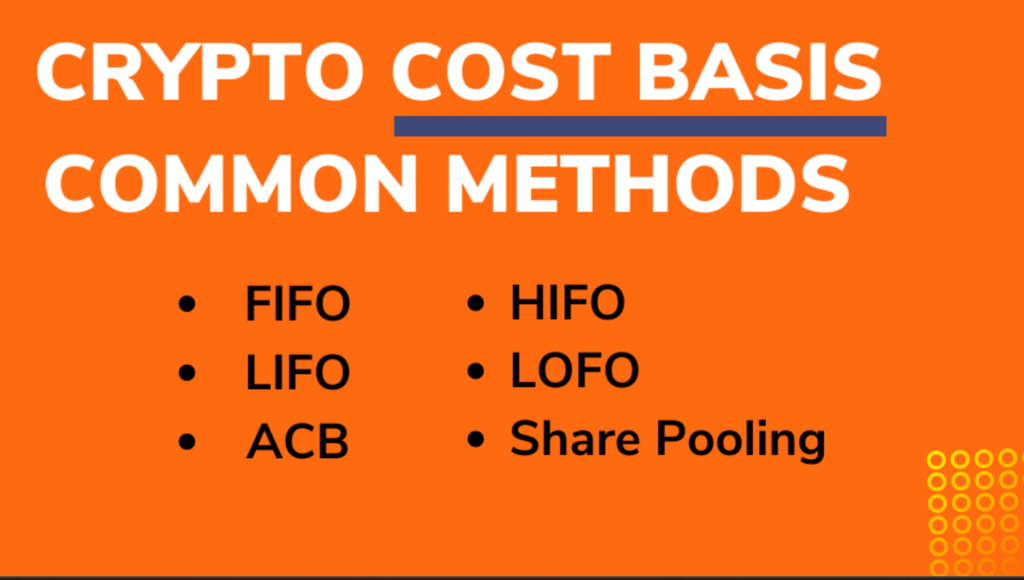
Tracking cost basis manually is challenging in DeFi due to frequent transactions. Common methods include:
| Method | How It Works | Pros | Cons |
|---|---|---|---|
| FIFO (First In, First Out) | First tokens bought are first sold | Simple to use | May increase taxable gains |
| LIFO (Last In, First Out) | Last tokens bought are first sold | Can reduce gains in some cases | Not accepted in all jurisdictions |
| Specific Identification | Track exact tokens sold | Most accurate | Requires detailed record-keeping |
Tools to Automate Cost Basis Tracking
Several platforms help calculate cost basis for DeFi transactions:
- CoinTracker: Supports DeFi wallets and generates tax reports
- Koinly: Tracks token swaps, liquidity, and staking rewards
- TokenTax: Handles complex DeFi transactions for reporting
Using these tools reduces errors and simplifies compliance with tax authorities.
Reporting Cost Basis for Taxes
Correctly reporting cost basis ensures you pay the right taxes:
- Include all crypto sales, swaps, and rewards on your tax return
- Report staking and DeFi rewards as income
- Use your tracked cost basis to calculate capital gains
- Keep detailed records in case of audits
Common Mistakes to Avoid
DeFi participants often make these mistakes when calculating cost basis:
- Ignoring transaction fees
- Not tracking token swaps as taxable events
- Forgetting LP tokens’ cost basis
- Omitting staking or yield farming rewards
- Mixing tokens from different wallets
Avoiding these errors ensures accurate reporting and prevents potential penalties.
Example Scenario: Cost Basis for a DeFi User
Scenario: You participate in multiple DeFi activities:
- Buy 2 ETH at $1,000 each ($2,000 cost basis)
- Swap 1 ETH for 1,500 DAI (cost basis of DAI = $1,000)
- Provide liquidity with 1 ETH + 1,500 DAI (LP token cost basis = $2,500)
- Earn 50 UNI tokens through staking when each token = $20 (income = $1,000, cost basis = $1,000)
When selling these tokens, gains are calculated based on the cost basis outlined above.
Internal and External Resources
For guidance on DeFi taxation, visit CryptoNews21 for updates and news. For official IRS guidance on crypto cost basis, check IRS Virtual Currency FAQs.
Frequently Asked Questions
Q1: Does every DeFi transaction have a cost basis?
Yes, every purchase, swap, or earned token must have a cost basis for tax purposes.
Q2: How do I calculate cost basis for LP tokens?
Add the fair market value of all tokens deposited, including fees, to determine the LP token cost basis.
Q3: Are staking rewards considered income or capital gains?
Staking rewards are taxable as income when received; selling them triggers capital gains tax based on their cost basis.
Q4: Can I use FIFO for DeFi tokens?
Yes, FIFO is commonly used but consult your tax professional to confirm compliance with your jurisdiction.
Q5: Are transaction fees included in cost basis?
Yes, transaction fees and gas costs are part of the cost basis.
Conclusion
Calculating cost basis for DeFi transactions is essential for accurate tax reporting and avoiding penalties. By understanding token swaps, LP tokens, staking rewards, and airdrops, you can ensure all gains and losses are correctly calculated. Using tracking methods or specialized software helps simplify this process.
With careful record-keeping and awareness of cost basis rules, DeFi participants can confidently manage their investments while staying compliant with tax authorities.